Hand Grenades: A.K.A. The Route I Couldn’t Quit
Horseshoes and Hand Grenades, 5.11a, Horseshoe Canyon Ranch, Arkansas.
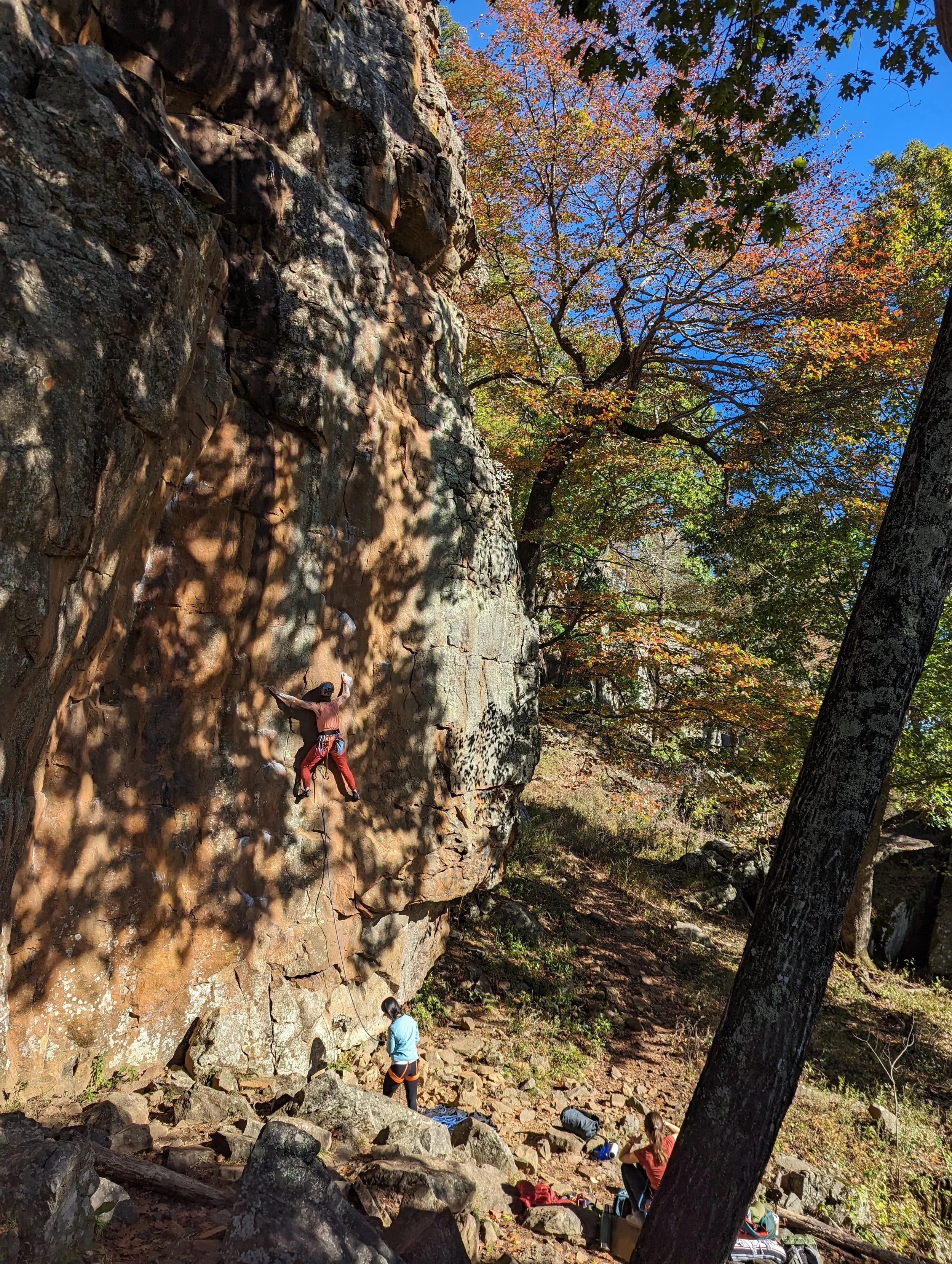
“Why do I do this. Nobody’s making me do this.”
I utter it through tears, sitting in my harness twenty feet off the ground. My partner and belayer, Tim, lets me have my moment. He knows my complaints are rhetorical and I want nothing more than to be exactly where I am, but I’m letting frustration get to me.
Truth is, I’m often frustrated, doubtful, sad, nervous, self-conscious — but this stuff doesn’t usually make its way from my brain to my throat to my mouth.
I usually let it go and keep climbing.
But today it seems I’ve opened a floodgate.
“I shouldn’t project anything. We’re only able to come out here for a couple hours at a time — that’s not enough time to project. Fucking stupid.”
We have to be back to town by 4:00 at the absolute latest to pick up the kids from school. Other than the odd Wednesday like today, the only other day of the week our schedules permit us to climb outside is Sunday, and this coming Sunday is looking to be freezing.
With holiday responsibilities, this may be our last chance to climb outside for weeks to come.
But I know I’m not getting this route clean from start to finish today. And now I’m mad because I don’t want to climb it today, not with how I’m feeling, but now I have to climb it or else leave behind a quickdraw.
It’s only an eight-dollar piece of equipment but it would be so dumb to have to leave it behind.
Tim lowers me. When my feet are on the ground, he suggests taking a walk. There’s no one around, so we leave our stuff and walk a short distance.
Why this route
I chose to make Horseshoes and Hand Grenades (HaHG) my project in 2023 at a very crucial turning point in my life — just months after I left my abuser and was re-emerging into the climbing world after a hiatus.
I chose this route because it excited me: vertical, crimpy, and Martian-rock red, it was beautiful and one of the best technical face climbs Horseshoe Canyon Ranch had to offer.
It was also a 5.11a, which was a huge deal to me in 2023, when I was still anxious at the idea of leading anything above 5.9 outside. At this time, I could still count my Arkansas climbing trips on one hand, with only a paltry few Colorado climbs from pre-2020 beyond that.
I was getting physically strong again, and I had a decade of gym experience, but I wasn’t a confident outdoor climber yet.
The first time I tried HaHG, I set my intention and my three gal pals were very on-board. We traipsed off to the East Side on a gorgeous, sunny winter day and had the place to ourselves.
We warmed up on the nearby New Roman Wall, then popped over to HAHG where we all thought we’d give it a shot. Jessa had sent it before, but courteously didn’t mention a thing about the climb to me — she simply climbed up to a big rock and got the best video and photo vantage point to document my first try.
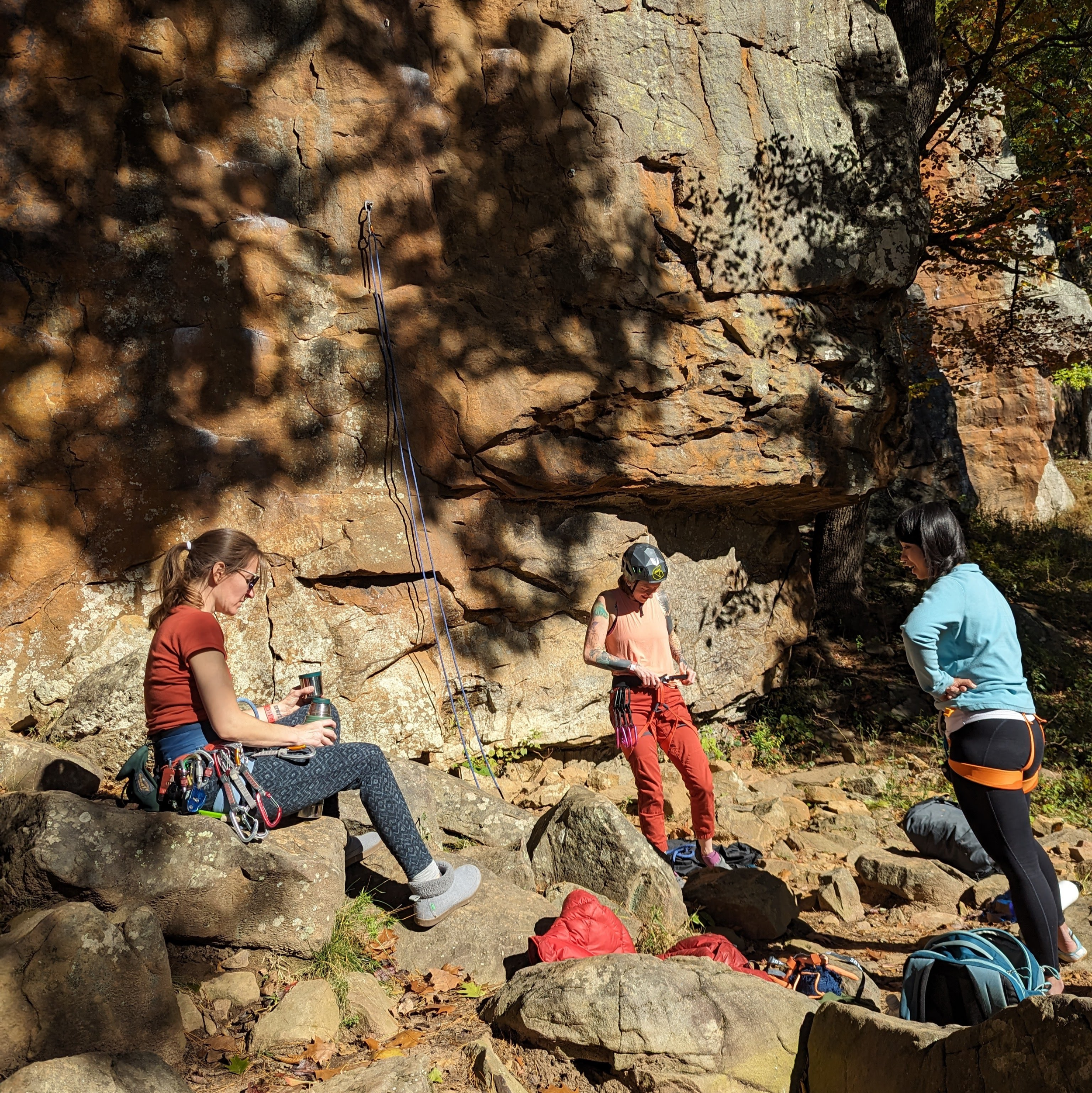
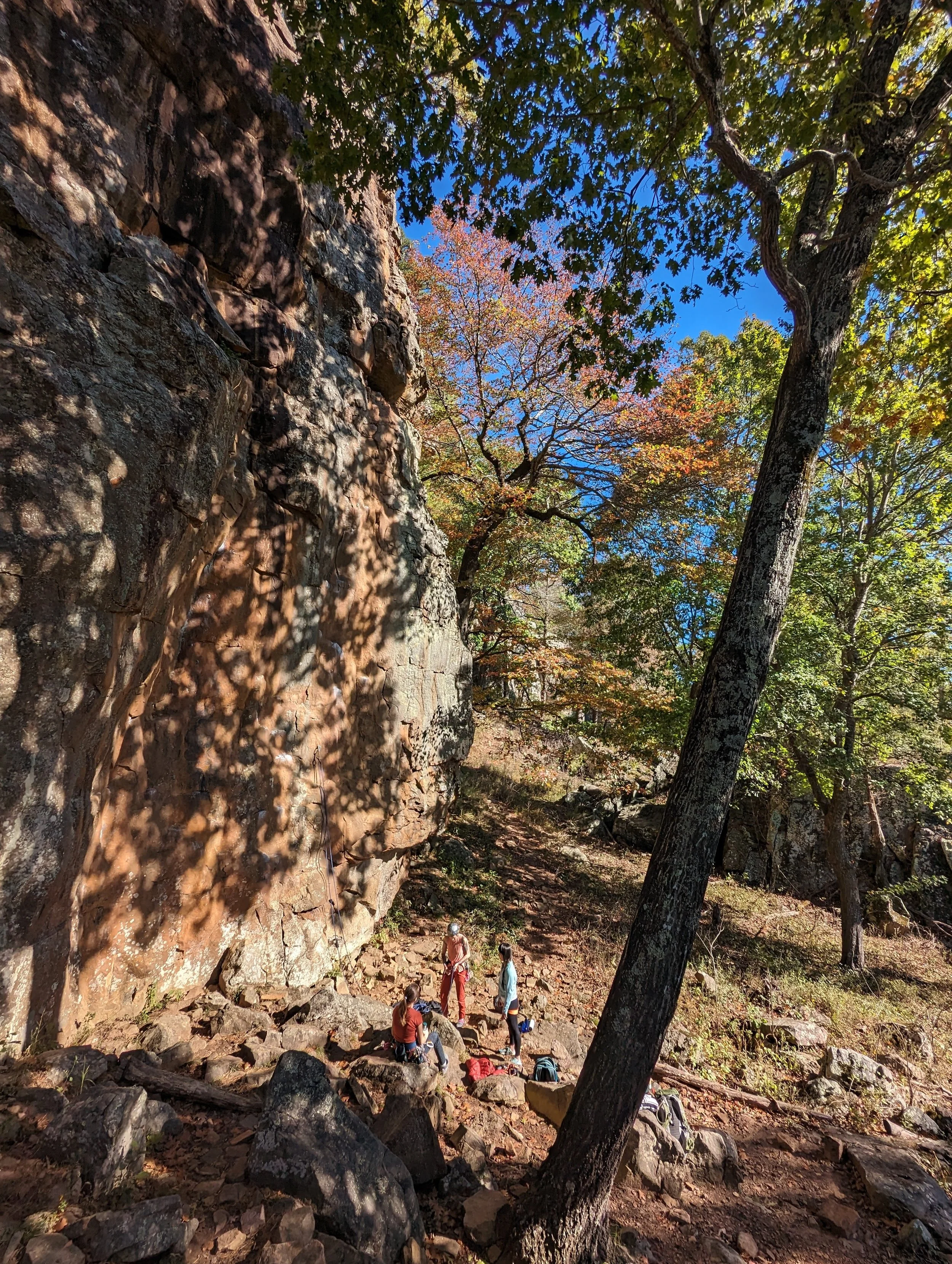
For me, my onsight (first) attempt at a climb is usually really freeing. I’m going off intuition and I’m not in my head too much.
But.
As soon as I get an idea in my head about a specific crux or move or challenge, I struggle to get back out of my head.
That’s why my first attempt at HAHG was so memorable: I cruised through the first part of the crux, without any real kind of doubt, and locked in the second half somewhat easily before calling “take” to rest. My ignorance of the route was a blessing and curse: while it had empowered me to sail through the hardest part, it also led me to stop and rest under the assumption that the difficulty would be sustained.
I could have potentially onsighted HAHG that day…
But then I would have missed out on the joy of failing at this route constantly over the next two years! (Joking? Maybe a little.)
The rest of that day with the girls is now a glorious blur of laughter and winter warmth, and I wouldn’t revisit HAHG until a year and a half later with my new-at-the-time-boyfriend, Tim.
Summer of 2025 I decide I’m ready to try it again. I have the confidence that I can climb through the crux, but no memory of how to do it, and find myself sitting at second draw, puzzling over how to get up to the crimp high above my head. It’s a very committing move, I realize, and I’m confounded at how I did this so easily the first time.
I stall out a few times, locking off (tensing my whole upper body) to try and reach this tiny crimp, before extending back down to my “safe” position right by second draw.
Finally, I commit, and just barely catch the left crimp with my fingertips before adjusting to get more of my fingers wrapped onto the hold.
I pull a draw off my harness, clip it, clip my rope in, and call out for Tim to take.
That day, I put in a healthy number of attempts. I climb it clean on top rope at the very end, which, in my mind, means I can certainly lead it clean — and will, next time.
Flash forward to next time. The tantrum time.
The tantrum
It’s cold out, blustery. The stiff wind keeps catching piles of leaves and hoisting them up in the air in various directions, reverse confetti. Tim and I are going for a walk because I’m frustrated at how climbing feels today. It all feels heavy, and I am angry that it feels heavy, because it is ultimately a privilege to be out here at all, enjoying this expansive, quiet space in the stillness of December with a human I love.
I’m scared I’m starting to take this place, or climbing generally, for granted. I don’t want to be the kind of person who takes anything for granted. But this place that once felt like a getaway now feels as familiar as a driveway. The thrill of pushing myself feels gone.
Tim has the right combination of words to get me back out of my head. It was a reminder about setting and achieving process goals, not just end goals, a topic I’d recently read about.
Incremental successes (process goals) may be more internal and less outwardly glorious than a send (end goal), but tend to have a lot more staying power in terms of their impact on morale.
I wish I had a transcript of everything else he said because it was truly powerful, the kind of thing that only comes from spending lots of time with someone and knowing what they need in the moment.
But I get back on the route, even after all those tears and self-pity. This time, I am talking my decisions out, and I’m doing it without judgment. It’s more like I’m observing someone else climbing than thinking about myself climbing.
“I could try my foot here, see how that feels…”
The tone I’m using with myself now is completely different. I’m working through a problem, not beating myself up for not having the solution.
I move through both crux sequences, yet again, for the millionth time, and ask Tim to take — but I know the route from here, and I know it’s easy after this point. I won’t have to leave behind a quickdraw after all.
Tim yells, “you should get yourself a fancy coffee today, since you just saved eight dollars!”
Five months later
I don’t touch HaHG again until May of the following year.
The bar is low: I hadn’t slept much the night before, and since my son’s recent ASD/ADHD diagnosis and mandatory withdrawal from kindergarten, I’ve been constantly on edge.
We warm up on Swamp Rat and the Cliffs of Insanity, breezing through long jugfests and enjoying the sun on our backs. I’m feeling better and better, the more air I breathe.
Then we traipse over to the project.
Attempt one: I overthink everything and come down.
Attempt two: I think about nothing, end up breathing way too hard and getting myself pumped, and come down.
Before attempt three, I take a long break.
Eat a light snack.
Listen to the wind in the treetops.
Mentally remind myself of all the kind and true things.
This time, when I get back on, I breathe slowly. This route is like a dance, by now, a choreographed number I could almost climb with my eyes closed. I trust the process and keep myself calm.
Here are the two cruxes, followed by my audible "Holy shit. I can't believe I did that."
…Followed by Tim's audible "I can."
I did a tiny victory whip, let out a nerdy “woo!” at the top, and was crying happy tears the whole way down. I forced myself to take a moment to be present and observe everything around me, locking in that moment in time in my memory.
So, lessons learned: if you feel some internal compulsion (it has to be internal) to complete a project, stick with it. Be flexible to changing conditions, whether in the environment or in yourself, and try different things until you find what’s smoothest.
Find the dance, and dance.